SSA Impersonation Scams Are Getting More Personal — And More Dangerous
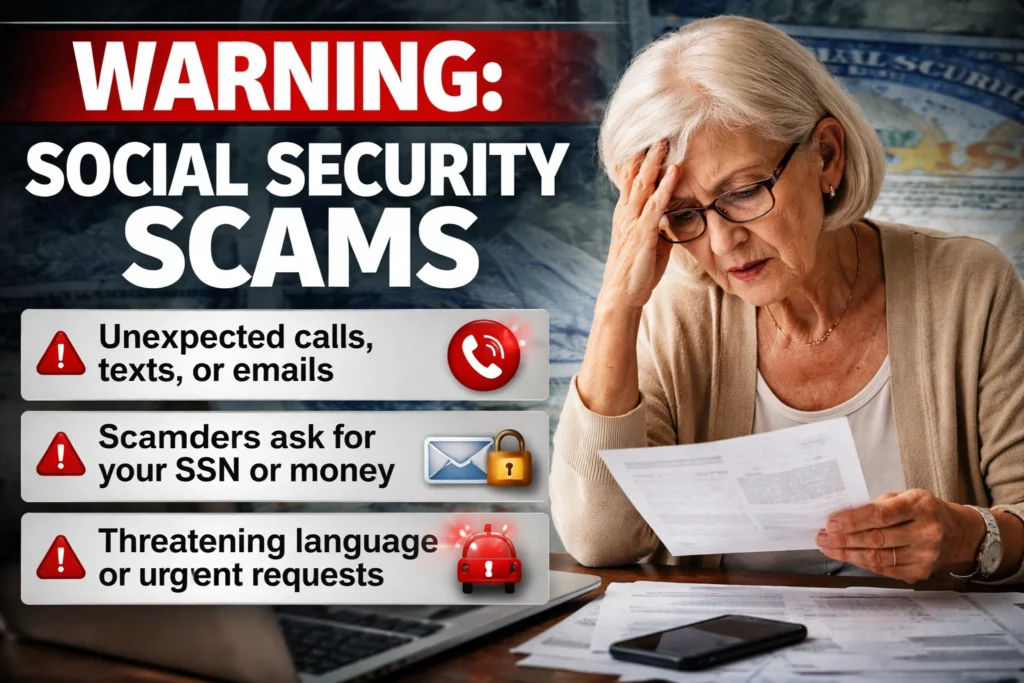
A growing wave of highly targeted scams impersonating the Social Security Administration is putting millions of Americans at risk, as cybercriminals increasingly leverage stolen personal data to make their schemes more convincing than ever before.
Federal officials, including the SSA’s Office of Inspector General, issued renewed warnings during the March 2026 “Slam the Scam” campaign, highlighting a sharp rise in fraud attempts tied to Social Security impersonation. According to the Federal Trade Commission, more than 330,000 government impersonation complaints were filed in 2025 alone — a staggering 25% increase year-over-year.
Financial losses from these scams now reach hundreds of millions of dollars annually, making them one of the most persistent and costly forms of consumer fraud in the United States.
A New Generation of Scams: Personalized and Precise
Unlike older scam attempts that relied on generic messaging, today’s fraudsters are using real personal data — often obtained from past data breaches — to craft messages that feel authentic.
- Victims report receiving emails, phone calls, and text messages that:
- Include their full name or partial Social Security number
- Reference real benefits or account activity
- Mimic official SSA formatting and tone
- Appear to come from legitimate government phone numbers
This level of personalization makes it significantly harder for individuals to distinguish between real and fraudulent communication.
“These scams are evolving rapidly,” officials warn. “When a message includes details that match your real life, your instinct is to trust it — and that’s exactly what scammers are counting on.”
How SSA Impersonation Scams Work
At their core, these scams are designed to exploit trust in government institutions. Fraudsters pose as SSA representatives and create a false sense of urgency.
Step 1: Initial Contact
Scammers reach out via:
- Phone calls (often spoofed to look official)
- Emails resembling SSA notifications
- SMS texts claiming account issues
Some messages claim:
- Your Social Security number has been suspended
- There is suspicious activity linked to your account
- You must verify information immediately to avoid penalties
Step 2: Building Credibility
To gain trust, scammers:
- Use real SSA employee names
- Include official-looking logos and templates
- Reference partial personal details
In some reported cases, criminals even attach photos of real SSA employees to appear legitimate.
Step 3: The Hook
Victims are then asked to:
- Click a link to “verify” their account
- Download a “Social Security statement”
- Call a number to resolve an issue
These links often lead to phishing websites designed to steal login credentials or install malware.
50-Year-Old Shakey’s Pizza Chain, Shuts Down All Outlets
What Scammers Want From You
Once contact is established, scammers typically pursue one of two goals:
1. Personal Information
They may ask for:
- Full or partial Social Security number
- Date of birth
- Address and phone number
- Banking details
- Login credentials or one-time verification codes
- This information is often framed as necessary for “identity verification.”
2. Direct Financial Gain
In many cases, scammers escalate to requesting money:
- Wire transfers
- Gift card payments
- Cryptocurrency transactions
- Instructions to “move money to a safe account”
- These payment methods are difficult to trace, making recovery nearly impossible.
What Happens After You’re Targeted
The consequences of falling victim to an SSA impersonation scam can be severe and long-lasting.
- Identity Theft and Fraud
- With enough personal data, scammers can:
- Open new credit accounts in your name
- Apply for loans or credit cards
- Access existing financial accounts
- Hijacking Social Security Benefits
- Fraudsters may attempt to:
- Change direct deposit details
- Redirect benefit payments
- Access retirement or disability records
- Long-Term Financial Damage
Even after initial fraud, stolen data can be reused to:
- Create synthetic identities
- Commit additional fraud over time
- Sell information on dark web marketplaces
- Warning Signs You Should Never Ignore
The SSA has outlined several red flags that strongly indicate a scam:
- Unsolicited contact claiming to be from the government
- Messages creating urgency or fear (e.g., threats of arrest or suspension)
- Requests for sensitive personal information
- Instructions to pay via gift cards, crypto, or wire transfers
- Emails asking you to click links or download attachments
https://en.wikipedia.org/wiki/Social_Security_Administration
If you encounter any of these signs, it’s critical to stop communication immediately.
What the SSA Will Never Do
Understanding how the real SSA operates is one of the best defenses against fraud.
The Social Security Administration:
- Will NOT call, text, or email you out of the blue requesting personal information
- Will NOT ask for full SSNs or banking details via unsecured channels
- Will NOT demand immediate payment to resolve issues
- Will NOT threaten arrest or legal action
Official communication typically occurs through:
- Mailed notices
- Your secure “My Social Security” account
- Verified phone numbers listed on SSA.gov
- Real Cases Highlight Growing Threat
Earlier in 2026, authorities identified a surge in phishing emails posing as SSA notifications. These emails instructed recipients to download their Social Security statements — but the links redirected users to fraudulent websites.
Victims who clicked the links often:
- Had their credentials stolen
- Installed malware unknowingly
- Lost access to financial accounts
The increasing sophistication of these attacks shows how cybercriminals are adapting quickly to exploit public trust.
What To Do If You Receive a Suspicious Message
If you are contacted by someone claiming to be from the SSA:
- Do not respond
- Do not click links or download attachments
- Do not call back the number provided
Instead:
- Visit the official SSA website directly
- Use verified contact information to confirm any claims
What To Do If You’ve Already Shared Information
If you believe you’ve been targeted or compromised:
- Act Immediately
- Stop all communication with the scammer
- Document what information you shared
- Report the Incident
- File a report with the SSA Office of Inspector General
- Visit IdentityTheft.gov to create an official record
- Protect Your Finances
- Place a fraud alert or credit freeze
- Monitor your credit reports from major bureaus
- Watch for unauthorized transactions
The Role of Data Breaches in Modern Scams
One of the biggest drivers behind these personalized scams is the explosion of data breaches over the past decade.
Millions of Americans have had their:
- Names
- Addresses
- Social Security numbers
- Email credentials
exposed in breaches involving major corporations, financial institutions, and online platforms.
Scammers aggregate this data to build detailed profiles, allowing them to craft highly believable impersonation attempts.
Why Retirees Are Prime Targets
Older Americans are particularly vulnerable to SSA impersonation scams due to their reliance on Social Security benefits.
Many retirees:
- Depend on monthly payments as primary income
- Are more likely to respond to benefit-related messages
- May be less familiar with evolving digital scam tactics
Fraudsters exploit this by sending urgent messages related to:
- Benefit disruptions
- Account verification
- Payment issues
The Psychology Behind These Scams
Scammers rely on emotional triggers to manipulate victims:
- Fear: Threats of account suspension or legal action
- Urgency: Pressure to act immediately
- Authority: Pretending to be government officials
- Trust: Using accurate personal details
When combined, these tactics can override even cautious decision-making.
How to Protect Yourself in 2026
1. Verify Everything
Always confirm suspicious messages through official channels.
2. Limit Personal Data Exposure
Avoid oversharing online
Use privacy settings on social media
3. Use Strong Security Practices
Enable two-factor authentication
Use unique passwords
4. Monitor Your Credit
Regularly check for:
- New accounts
- Unusual inquiries
- Changes in your credit report
5. Consider Identity Protection Services
These tools can:
- Alert you to suspicious activity
- Monitor dark web exposure
- Assist with recovery if fraud occurs
The Bigger Picture: A Growing Cybersecurity Crisis
The rise in SSA impersonation scams reflects a broader trend in cybercrime — one where attackers are becoming more sophisticated, organized, and data-driven.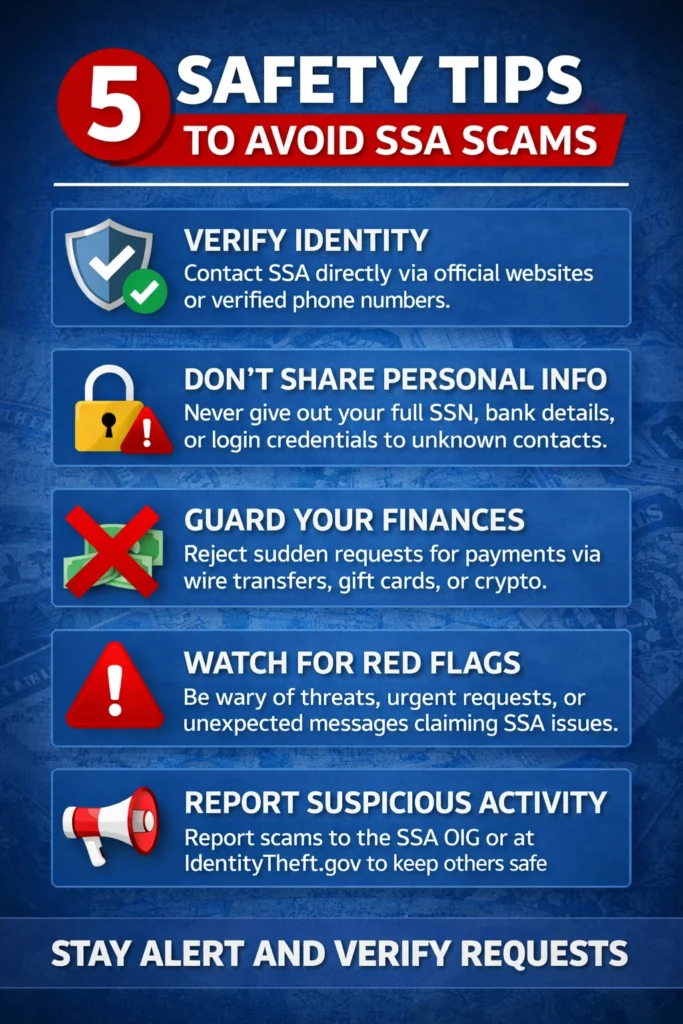
Government agencies and tech companies are increasing efforts to combat fraud, but experts warn that consumer awareness remains the first line of defense.
Key Takeaways
SSA impersonation scams are no longer crude or easy to spot. They are highly personalized, data-driven attacks designed to exploit trust and urgency.
Scams increased significantly in 2025
- Criminals use real personal data to appear legitimate
- Losses reach hundreds of millions annually
- Retirees and vulnerable populations are primary targets
The most effective defense is simple but powerful:
- Pause, verify, and never share sensitive information without confirmation.
Final Word
As cybercriminals continue to evolve, SSA impersonation scams are becoming not just more frequent, but far more convincing and personal. By using real data pulled from past breaches, scammers are blurring the line between legitimate communication and fraud. This shift means that even careful, informed individuals can be caught off guard if they rely solely on how “real” a message looks or feels.
The warning from the Social Security Administration is not just a routine advisory — it reflects a growing and persistent threat that is impacting hundreds of thousands of Americans every year. With losses climbing into the hundreds of millions and tactics becoming increasingly sophisticated, these scams are no longer isolated incidents but part of a larger cybersecurity challenge.
What makes these scams particularly dangerous is the speed at which they operate. A single moment of panic — triggered by fear, urgency, or authority — can lead to irreversible consequences. Once personal data is shared or money is sent, recovery becomes difficult, time-consuming, and in many cases incomplete. That’s why prevention remains the most effective defense.
In today’s digital world, awareness is your strongest protection. Taking a few extra seconds to verify a message, refusing to share sensitive information over unsolicited communication, and staying informed about emerging scam tactics can make all the difference. It’s not about being overly cautious — it’s about being prepared.
Ultimately, the responsibility is shared. While agencies like the SSA and the Federal Trade Commission continue to raise awareness and strengthen safeguards, individuals must also adopt smarter habits when it comes to digital security.
The bottom line is simple but critical: trust should never be given automatically — it should always be verified. In an era where your personal information can be used against you, staying alert, informed, and cautious is the key to protecting both your identity and your financial future.
Disclaimer:
The content on this blog is for informational and educational purposes only. The views and opinions expressed here are those of the author and do not constitute professional advice. While we strive for accuracy, we make no guarantees regarding the completeness, reliability, or suitability of the information. Readers should use their own judgment and, if necessary, consult a qualified professional before making any decisions based on the content of this blog.