When Billie Eilish Said “No One Is Illegal on Stolen Land,” It Wasn’t Just a Slogan
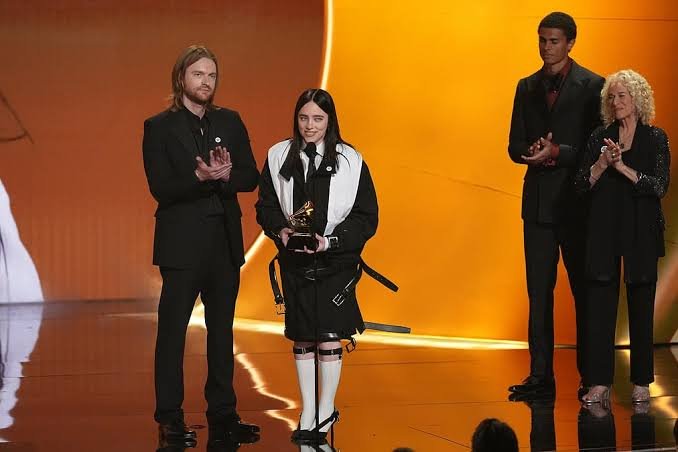
At the Grammy Awards, when Billie Eilish said, “No one is illegal on stolen land,” it wasn’t just a viral soundbite. It was history. It was power. It was truth condensed into a single sentence. In an era where artists are often told to “stick to music,” her words cut through the noise — forcing audiences to confront uncomfortable questions about land, migration, and who gets to decide belonging.
The Politics of “Illegality”
The word illegal sounds neutral. Administrative. Legal. But historically, “illegality” has rarely been neutral. From Indigenous communities whose lands were colonized and renamed, to migrants today facing detention and deportation, legality has always been defined by those in power. Borders shift. Governments change. Laws evolve. Yet the people affected by those changes are often framed as criminals for existing in spaces their ancestors may have lived in long before modern states were formed. Countries built by migrants now label migrants as threats. Nations founded through displacement criminalize displacement. The contradiction is glaring — but normalized.
Stolen Land Is Not Metaphor
When activists say “stolen land,” they are not speaking metaphorically. They are referencing centuries of colonization, broken treaties, forced removals, and cultural erasure experienced by Native Americans in the United States and Indigenous peoples globally. The modern map is the product of power, not moral purity. To call someone “illegal” on land taken through violence raises an uncomfortable moral paradox: Who truly defines legality? And on what historical authority?
Why Performative Activism Still Matters
Critics were quick to dismiss Eilish’s statement as “performative.” The word is often used to suggest that public activism is shallow, symbolic, or self-serving. But visibility itself is power. When global artists speak, millions listen. Conversations begin. Young audiences question narratives they may have never examined before. Even symbolic statements can shift cultural discourse. History shows that art has always been political. Musicians, writers, and filmmakers have shaped civil rights movements, anti-war protests, and social justice campaigns. Silence has rarely been the force that moved society forward.
Calling out power — even briefly — interrupts the comfort of indifference.
The Comfort of Silence
There’s another reason statements like this feel disruptive: silence is often rewarded. Artists who avoid political topics are labeled “professional,” “focused,” or “mature.” Those who speak are told they are divisive. Yet silence itself is a position — one that protects the status quo. The real question is not whether artists should speak. The real question is why so many choose not to. Is it fear of backlash? Fear of losing sponsorships? Fear of alienating fans? Power does not only operate through laws and borders. It operates through incentives — who is praised, who is punished, and who is ignored.
Migration, Power, and Historical Memory
Migration is not new. Human history is a story of movement — survival, trade, war, climate, opportunity. Borders are recent inventions. Humanity is not. When we label people “illegal,” we reduce complex historical realities into bureaucratic categories. We detach people from context. We ignore the global inequalities, conflicts, and histories that shape migration flows. And most of all, we forget that many modern nations were built by the very kinds of people they now seek to exclude.
Why This Moment Matters
Whether one agrees with Billie Eilish or not, the cultural significance of her statement cannot be ignored. Artists questioning power is not a trend. It is tradition. From protest songs to political poetry, art has always been a mirror — sometimes uncomfortable, sometimes disruptive, often necessary. Calling human beings “illegal” may be legally convenient. But morally and historically, it is far more complicated. The sentence spoken on that stage wasn’t just a slogan. It was an invitation.
- To question.
- To research.
- To think beyond headlines.
- To examine who defines belonging — and why.
- Because power shapes history.
- But voices shape the future.
Disclaimer:
The content on this blog is for informational and educational purposes only. The views and opinions expressed here are those of the author and do not constitute professional advice. While we strive for accuracy, we make no guarantees regarding the completeness, reliability, or suitability of the information. Readers should use their own judgment and, if necessary, consult a qualified professional before making any decisions based on the content of this blog.