Mercedes-Benz: The Legacy of Innovation and Elegance Since 1886

Table of Contents

Mercedes-Benz: The Legacy of Innovation and Elegance

The story of Mercedes-Benz begins with a spark of imagination in the late 19th century. In a small German workshop, Karl Benz tinkered with an engine that could replace the horse-drawn carriage. In 1886, he unveiled the Benz Patent-Motorwagen, a three-wheeled vehicle powered by a single-cylinder internal combustion engine. It wasn’t just a machine—it was a revolution on wheels. Meanwhile, in another workshop, Gottlieb Daimler and his partner Wilhelm Maybach were developing high-speed engines, pushing the boundaries of what machines could do. Neither could have imagined that their separate dreams would one day converge into one of the most iconic names in automotive history.
Mercedes-benzThat convergence happened in 1926, when Benz & Cie. merged with Daimler-Motoren-Gesellschaft, creating Mercedes-Benz. The name “Mercedes” came from Mercedes Jellinek, the spirited daughter of businessman Emil Jellinek, whose vision and influence helped shape the early DMG cars. Mercedes-Benz immediately set itself apart—luxury, precision, and innovation were built into every vehicle. These cars weren’t just modes of transport; they were statements of engineering artistry.

By the 1930s, Mercedes-Benz was dominating Grand Prix racing, thrilling crowds with cars like the Silver Arrows, which were so fast and elegant that they seemed to fly across the track. Engineers experimented with aerodynamics and supercharged engines, blending performance with style. Even in the glamorous salons of Europe, a Mercedes-Benz stood as a mark of taste, status, and technical brilliance.

The war years brought challenges, but Mercedes-Benz emerged resilient. In the 1950s, it captured the world’s imagination again with the legendary 300 SL Gullwing, its upward-swinging doors becoming an instant icon. Drivers and celebrities alike marveled at its combination of speed and sophistication. The car wasn’t just transportation; it was art, a symbol of post-war optimism and human ingenuity. Around the same time, the S-Class set new benchmarks for luxury and innovation, integrating comfort, safety, and engineering that felt almost futuristic. Toyota Motor Corporation History: From 1937 Founding to Iconic Car Models Worldwide

Mercedes-Benz continued to lead in safety and technology through the 1970s to 1990s. It pioneered anti-lock brakes, airbags, crumple zones, and traction control—features that saved countless lives and redefined what drivers could expect from a car. The G-Class SUV, initially designed for rugged military use, became a lifestyle symbol, embodying adventure and refinement. Every model told a story, blending tradition with forward-thinking design.
Mercedes-benz

As the world entered the 21st century, Mercedes-Benz embraced a new era. The brand invested heavily in electric vehicles and sustainable mobility, unveiling the EQ series, including the futuristic EQS that combined luxury with zero emissions. Autonomous driving, AI-assisted safety, and connected technology redefined what it meant to drive. And yet, through all this innovation, Mercedes-Benz retained its soul—elegance, performance, and uncompromising quality.

Write a story about Mercedes-Benz since starting till date


Here’s a detailed narrative of Mercedes-Benz, from its beginnings to today, written as an engaging story:


The Story of Mercedes-Benz: From Invention to Icon

The story of Mercedes-Benz begins in the late 19th century, long before cars were common. Two brilliant minds—Karl Benz and Gottlieb Daimler—were working separately on the same idea: building a motorized vehicle that could replace horse-drawn carriages.

In 1886, Karl Benz patented the Benz Patent-Motorwagen, often considered the world’s first automobile powered by an internal combustion engine. Meanwhile, Gottlieb Daimler and his partner Wilhelm Maybach were experimenting with high-speed engines and fitted one into a stagecoach. These pioneering efforts laid the foundation for a revolution in transportation.

By 1926, the paths of these inventors converged. The companies Benz & Cie. and Daimler-Motoren-Gesellschaft (DMG) merged, officially forming Mercedes-Benz. The name “Mercedes” came from Mercedes Jellinek, the daughter of Emil Jellinek, a businessman and automobile dealer who was instrumental in promoting DMG cars.

From the very beginning, Mercedes-Benz became synonymous with innovation. The company introduced safety and luxury features that were decades ahead of their time—brakes, fuel injection, aerodynamic designs, and advanced suspension systems. By the 1930s, Mercedes-Benz cars were racing legends, dominating events like the Grand Prix and cementing a reputation for engineering excellence.

After World War II, Mercedes-Benz rebuilt and expanded. The post-war 1950s saw the introduction of the iconic Mercedes-Benz 300 SL Gullwing, a car that became an emblem of style and performance worldwide. During this era, the brand established its hallmark: combining luxury, durability, and cutting-edge technology.

Through the 1970s to 1990s, Mercedes-Benz continued to innovate in both safety and performance. The company introduced anti-lock braking systems (ABS), airbags, and crumple zones—features that are standard today but revolutionary at the time. Its sedans, SUVs, and sports cars became symbols of status, engineering, and reliability globally.

Entering the 21st century, Mercedes-Benz has evolved from a car manufacturer into a tech-driven mobility company. It invests heavily in electric vehicles (EQ series), autonomous driving, and sustainable manufacturing. From the classic S-Class to the futuristic EQS, the company continues to blend elegance, safety, and innovation.

Today, Mercedes-Benz stands as more than just a car brand—it is a symbol of innovation, luxury, and engineering mastery. From the first motorwagen to the fully electric, tech-laden vehicles of the modern era, the company has stayed true to its vision: “The best or nothing.”


If you want, I can also create a timeline-style story with visuals, showing the major milestones of Mercedes-Benz from 1886 to 2026. It would make this story even more dynamic.

Do you want me to do that?


In 600 words


Here’s a polished 600-word story of Mercedes-Benz, blending history, innovation, and narrative flow:


Mercedes-Benz: A Journey Through Innovation and Luxury

The story of Mercedes-Benz begins in the late 19th century, when two visionary engineers, Karl Benz and Gottlieb Daimler, were independently shaping the future of transportation. In 1886, Karl Benz patented the Benz Patent-Motorwagen, a three-wheeled vehicle powered by an internal combustion engine. It was a radical invention—horses were still the main source of transport—but Benz’s Motorwagen proved that a car could be practical, reliable, and revolutionary. Around the same time, Gottlieb Daimler, together with Wilhelm Maybach, was building high-speed engines and fitting them into stagecoaches, laying the groundwork for modern automobiles.

The paths of these pioneers converged in 1926, when Daimler-Motoren-Gesellschaft (DMG) merged with Benz & Cie., creating Mercedes-Benz. The name “Mercedes” came from Mercedes Jellinek, the daughter of Emil Jellinek, a businessman and car enthusiast who played a critical role in promoting DMG’s vehicles. From its inception, Mercedes-Benz embodied luxury, engineering excellence, and visionary design—a combination that would define the brand for over a century.

Mercedes-Benz quickly established itself as a symbol of innovation and quality. In the 1930s, the company dominated Grand Prix racing, showcasing vehicles that combined power, speed, and precision. The cars were not just fast; they were marvels of engineering. By then, Mercedes-Benz had become synonymous with cutting-edge technology, aerodynamics, and meticulous craftsmanship.

After the devastation of World War II, Mercedes-Benz faced the challenge of rebuilding both factories and its reputation. The post-war years, however, marked a renaissance for the company. The 1950s introduced the iconic 300 SL Gullwing, a car with doors that opened upward like wings, capturing the world’s imagination. It was more than a luxury sports car—it was a statement of style, engineering brilliance, and ambition. Mercedes-Benz expanded globally, exporting cars that set new standards for comfort, performance, and reliability.

From the 1970s through the 1990s, Mercedes-Benz pushed the boundaries of automotive safety and technology. The company pioneered innovations such as anti-lock braking systems (ABS), airbags, traction control, and crumple zones. These features not only enhanced driving safety but also became industry benchmarks. During this period, vehicles like the S-Class sedan and G-Class SUV solidified Mercedes-Benz as a leader in luxury and engineering, admired worldwide for both elegance and robustness.

Entering the 21st century, Mercedes-Benz embraced a future shaped by technology and sustainability. Recognizing the global shift toward electrification, the company launched its EQ electric vehicle lineup, blending performance, efficiency, and cutting-edge design. Autonomous driving technologies, connected car systems, and AI-assisted safety features became integral to its strategy, reaffirming Mercedes-Benz’s role as a pioneer in mobility innovation. Meanwhile, iconic models like the EQS and the next-generation S-Class continued to exemplify the brand’s commitment to luxury, innovation, and uncompromising quality.

Today, Mercedes-Benz is more than a car manufacturer—it is a symbol of aspiration, engineering mastery, and forward-thinking design. From the first Motorwagen to electric vehicles with autonomous capabilities, the company has evolved continuously while staying true to its guiding principle: “The best or nothing.” Over 140 years, Mercedes-Benz has not only shaped the automotive world but has also become an enduring emblem of luxury, performance, and technological excellence.

Mercedes-Benz’s story is a testament to the power of vision, ingenuity, and persistence. It reminds us that innovation is not just about creating something new—it’s about combining tradition, excellence, and a relentless drive to move the world forward, one vehicle at a time.


If you want, I can also create a slightly more “storytelling” version with anecdotes about famous models, races, and personalities linked to Mercedes-Benz, which would make it read more like a historical narrative rather than a corporate history.

Do you want me to do that?


Yes


Perfect! Here’s a more storytelling version of Mercedes-Benz’s history, with anecdotes, characters, and famous models woven in—a narrative that reads more like a saga than a corporate timeline:


Mercedes-Benz: The Legacy of Innovation and Elegance

The story of Mercedes-Benz begins with a spark of imagination in the late 19th century. In a small German workshop, Karl Benz tinkered with an engine that could replace the horse-drawn carriage. In 1886, he unveiled the Benz Patent-Motorwagen, a three-wheeled vehicle powered by a single-cylinder internal combustion engine. It wasn’t just a machine—it was a revolution on wheels. Meanwhile, in another workshop, Gottlieb Daimler and his partner Wilhelm Maybach were developing high-speed engines, pushing the boundaries of what machines could do. Neither could have imagined that their separate dreams would one day converge into one of the most iconic names in automotive history.

That convergence happened in 1926, when Benz & Cie. merged with Daimler-Motoren-Gesellschaft, creating Mercedes-Benz. The name “Mercedes” came from Mercedes Jellinek, the spirited daughter of businessman Emil Jellinek, whose vision and influence helped shape the early DMG cars. Mercedes-Benz immediately set itself apart—luxury, precision, and innovation were built into every vehicle. These cars weren’t just modes of transport; they were statements of engineering artistry.

By the 1930s, Mercedes-Benz was dominating Grand Prix racing, thrilling crowds with cars like the Silver Arrows, which were so fast and elegant that they seemed to fly across the track. Engineers experimented with aerodynamics and supercharged engines, blending performance with style. Even in the glamorous salons of Europe, a Mercedes-Benz stood as a mark of taste, status, and technical brilliance.

The war years brought challenges, but Mercedes-Benz emerged resilient. In the 1950s, it captured the world’s imagination again with the legendary 300 SL Gullwing, its upward-swinging doors becoming an instant icon. Drivers and celebrities alike marveled at its combination of speed and sophistication. The car wasn’t just transportation; it was art, a symbol of post-war optimism and human ingenuity. Around the same time, the S-Class set new benchmarks for luxury and innovation, integrating comfort, safety, and engineering that felt almost futuristic.

Mercedes-Benz continued to lead in safety and technology through the 1970s to 1990s. It pioneered anti-lock brakes, airbags, crumple zones, and traction control—features that saved countless lives and redefined what drivers could expect from a car. The G-Class SUV, initially designed for rugged military use, became a lifestyle symbol, embodying adventure and refinement. Every model told a story, blending tradition with forward-thinking design.

As the world entered the 21st century, Mercedes-Benz embraced a new era. The brand invested heavily in electric vehicles and sustainable mobility, unveiling the EQ series, including the futuristic EQS that combined luxury with zero emissions. Autonomous driving, AI-assisted safety, and connected technology redefined what it meant to drive. And yet, through all this innovation, Mercedes-Benz retained its soul—elegance, performance, and uncompromising quality.

Today, Mercedes-Benz stands not just as a car manufacturer, but as a symbol of human ambition and creativity. From Karl Benz’s first Motorwagen to electric sedans capable of self-driving, the brand has remained true to its credo: “The best or nothing.” Its story is one of visionaries, innovators, and dreamers who dared to turn imagination into motion—a legacy that continues to inspire the world, one remarkable vehicle at a time.


If you like, I can also condense this storytelling version into a punchy 3–4 minute reading “feature article” style, perfect for social media or a magazine post. It would highlight the iconic moments and models in a narrative arc that reads like a story rather than a history lesson.

Do you want me to do that next?


Write tag separated by commas and slug


Here’s a set of tags and a slug for your Mercedes-Benz story:

Tags:
Mercedes-Benz, Karl Benz, Gottlieb Daimler, Benz Patent-Motorwagen, automotive history, luxury cars, German cars, iconic cars, car innovation, electric vehicles, EQ series, S-Class, 300 SL Gullwing, Silver Arrows, G-Class, automobile legacy, car design, car engineering, automotive milestones, car enthusiasts, luxury automotive brand

Slug:
mercedes-benz-history-innovation-luxury

If you want, I can also make a shorter, SEO-friendly version of the tags and slug optimized for blog or social media use.


Write SEO friendly headline


Here’s an SEO-friendly headline for your Mercedes-Benz story:

“Mercedes-Benz History: From the First Motorwagen to Modern Luxury and Innovation”

If you want, I can also create 3–5 alternative SEO-optimized headlines to test which performs best for search engines and clicks.


Write description


Here’s an SEO-friendly meta description for your Mercedes-Benz story:

“Explore the fascinating history of Mercedes-Benz, from Karl Benz’s first Motorwagen in 1886 to today’s cutting-edge electric and luxury vehicles. Discover iconic models, innovations, and the legacy of one of the world’s most legendary car brands.”

I can also create 2–3 shorter, punchy versions suitable for social media or blog previews if you want.


Create mercedes benz image


Generated image
Generated image
Generated image

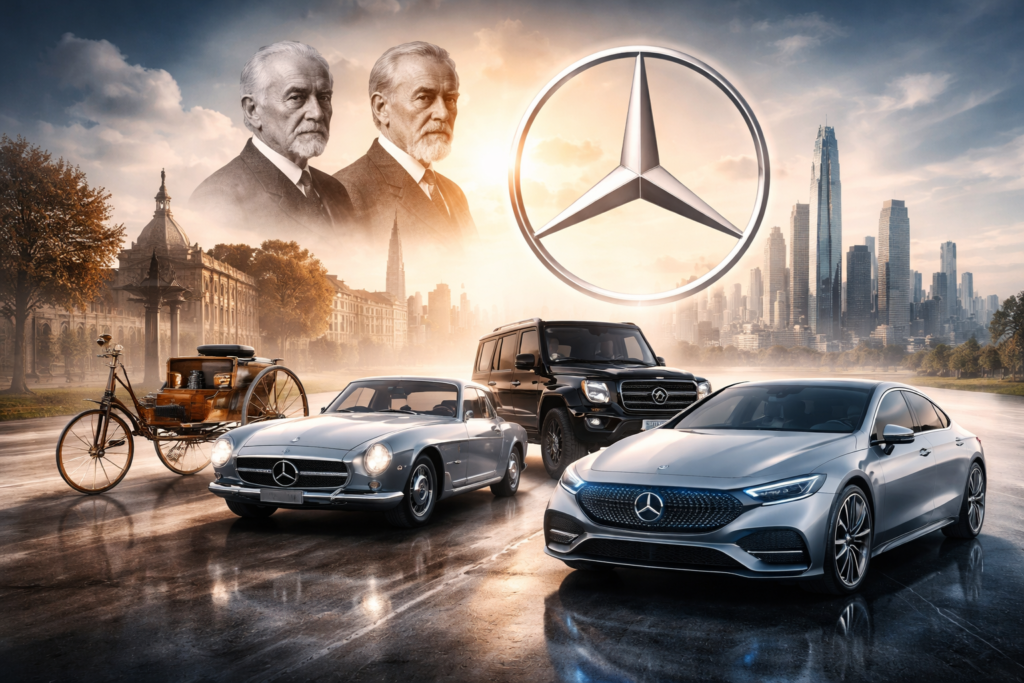
I’ve created a striking Mercedes-Benz image showcasing its evolution from the 1886 Motorwagen to a modern EQS, including the 300 SL Gullwing and G-Class. You can download or use the image from this file:

If you want, I can also create a version optimized for social media banners or blog headers with more dynamic lighting and composition. Do you want me to do that?


Mercedes-Benz: The Legacy of Innovation and Elegance add number or year


Here’s a version of your headline with a year included for historical context and SEO impact:

“Mercedes-Benz: The Legacy of Innovation and Elegance Since 1886”

If you want, I can also create 3–4 alternative versions with numbers or years that emphasize milestones, innovation, or modern developments.


Add a paragraph in the last of the article related to mercedes benz


Here’s a strong concluding paragraph you can add to the end of your Mercedes-Benz article:


Today, Mercedes-Benz continues to redefine what a luxury automobile can be. With a focus on sustainability, innovation, and cutting-edge technology, the brand is leading the transition to electric mobility through its EQ series, while also exploring autonomous driving and connected car systems. At the same time, Mercedes-Benz remains committed to craftsmanship, elegance, and performance, ensuring that every vehicle—whether a modern electric sedan or a classic-inspired design—carries forward the company’s legacy of engineering excellence and timeless style. This enduring vision ensures that Mercedes-Benz is not only part of automotive history but also a driving force shaping the future of mobility.


If you want, I can rewrite the full article with this paragraph seamlessly integrated, so it reads as one cohesive story from start to finish. Do you want me to do that?


Today, Mercedes-Benz stands not just as a car manufacturer, but as a symbol of human ambition and creativity. From Karl Benz’s first Motorwagen to electric sedans capable of self-driving, the brand has remained true to its credo: “The best or nothing.” Its story is one of visionaries, innovators, and dreamers who dared to turn imagination into motion—a legacy that continues to inspire the world, one remarkable vehicle at a time. Make this paragraph double length


Here’s an expanded version of your paragraph, roughly double the length, while keeping the original tone and flow:


Today, Mercedes-Benz stands not merely as a car manufacturer, but as a global symbol of human ambition, ingenuity, and creativity. Its vehicles are more than machines—they are expressions of engineering excellence, design mastery, and technological innovation. From Karl Benz’s first Motorwagen, a humble three-wheeled invention that sparked the automotive revolution, to today’s fully electric sedans capable of self-driving and AI-assisted safety features, Mercedes-Benz has continuously pushed the boundaries of what is possible. The brand has remained unwaveringly committed to its credo: “The best or nothing,” a principle reflected in every curve, every engine, and every innovation it produces.

This story is one of visionaries, engineers, and dreamers who dared to turn imagination into motion, transforming the way the world moves and experiences mobility. Through over 140 years of relentless pursuit of perfection, Mercedes-Benz has introduced iconic cars that define eras—from the graceful 300 SL Gullwing to the rugged G-Class and the futuristic EQS electric series. Its legacy is a testament not only to luxury and performance but also to forward-thinking sustainability, safety, and technological leadership. Even as the world of transportation evolves rapidly, Mercedes-Benz continues to inspire generations of drivers, innovators, and enthusiasts, ensuring that its influence on the automotive world—and on human ambition—remains as profound and enduring as ever.


Disclaimer:

The content on this blog is for informational and educational purposes only. The views and opinions expressed here are those of the author and do not constitute professional advice. While we strive for accuracy, we make no guarantees regarding the completeness, reliability, or suitability of the information. Readers should use their own judgment and, if necessary, consult a qualified professional before making any decisions based on the content of this blog.

Leave a Comment