The Rise and Sunset of the Tesla Model S: The Car That Rewired the Auto Industry
In 2012, a sleek, silent sedan rolled out of Tesla, Inc.’s factory and quietly altered the trajectory of the global auto industry. It didn’t roar. It didn’t rumble. It didn’t even try to look aggressive. Yet the Tesla Model S would go on to become one of the most disruptive vehicles of the 21st century.
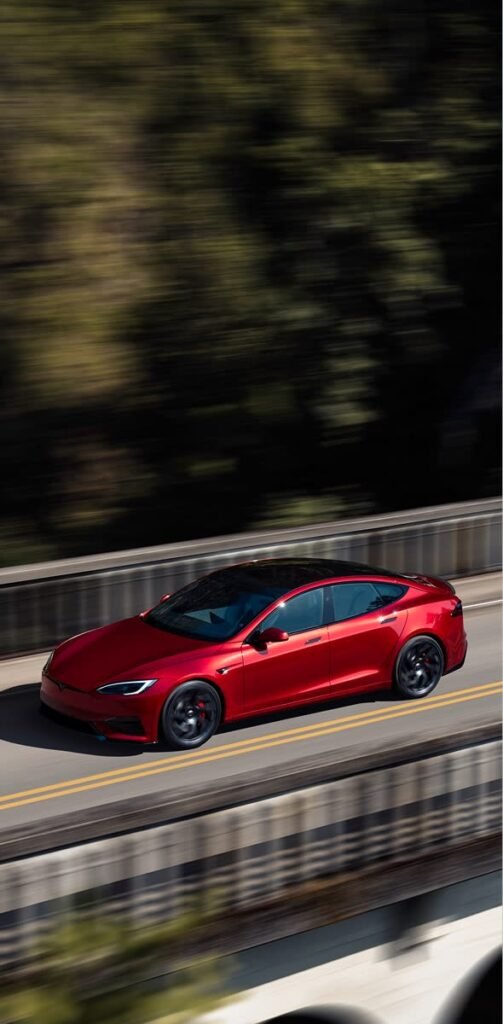
Now, with its production officially winding down, the Model S leaves behind more than a sales record. It leaves a blueprint for how to reinvent an industry. BYD Dolphin EV: दमदार बैटरी, फास्ट चार्जिंग और शानदार फीचर्स | BYD Dolphin: Smart, Stylish & Shockingly Practical
A Sedan That Changed the Rules
Before the Model S, electric vehicles were widely perceived as:
-
Small
-
Slow
-
Limited in range
-
Compromised in design
Early mass-market EVs like the Nissan Leaf proved battery-powered cars could work—but they didn’t ignite passion. The Model S did. When it launched, the Model S delivered:
- Over 250 miles of range (impressive for its time)
- Sports-car-level acceleration
- A minimalist, futuristic interior
- A massive vertical touchscreen replacing traditional buttons
- It wasn’t an eco-compromise. It was a luxury performance sedan that just happened to be electric.
- That distinction mattered.
- Built From Scratch, Not Retro-Fitted
Unlike competitors who adapted gasoline platforms for electric drivetrains, the Model S was engineered as a dedicated EV from the ground up. That allowed for:
- A low center of gravity (thanks to its battery pack placement)
- Improved safety ratings
- A spacious interior with both a trunk and a “frunk”
- Smooth, aerodynamic design
- It looked understated, but underneath it was radically different.
- The Software Revolution on Wheels
Perhaps the most important disruption wasn’t mechanical — it was digital.
The Model S normalized:
1. Over-the-Air Updates
The car could improve after purchase. Software updates added features, enhanced performance, and fixed bugs remotely. This was unheard of in the traditional dealership model.
2. Direct-to-Consumer Sales
Rather than relying on franchise dealerships, Tesla pioneered mall showrooms and online purchasing. This forced legal battles across U.S. states — and permanently altered how cars could be sold.
3. Advanced Driver Assistance
With the introduction of Autopilot in 2016, the Model S pushed semi-autonomous driving into the mainstream conversation. While controversial and evolving, it positioned software as central to automotive innovation.
Legacy brands eventually followed. Today, companies like Mercedes-Benz and Porsche AG offer connected upgrades and advanced driver systems that echo the Model S playbook. Performance Without Noise
The Model S redefined what “fast” could mean.
- Instant torque.
- No gear shifts.
- No engine vibration.
It proved that electric power wasn’t just efficient — it was exhilarating. High-performance versions stunned skeptics by outrunning traditional luxury sports sedans and challenging established icons in acceleration tests. For many buyers, this was the first time an electric car felt aspirational rather than practical.
Cultural Impact Beyond the Road
The Model S wasn’t just a car — it became a symbol. It represented:
- A tech-forward future
- Clean energy ambition
- A break from legacy automakers
- A Silicon Valley approach to hardware
By the early 2020s, Tesla had become one of the most valuable automakers in the world, joining the ranks of dominant tech giants in market influence.
The Model S was the foundation of that ascent.
- Competition Catches Up
- Success breeds rivals.
- Within a decade, nearly every major automaker had launched competitive EVs:
- Premium electric SUVs
- High-performance electric sedans
- Affordable compact EVs
- Long-range crossovers
- Battery costs dropped. Charging infrastructure expanded. Government incentives accelerated adoption.
The Model S, once revolutionary, began to feel familiar in a crowded field.
Why Its Discontinuation Matters
When news emerged that the Model S would be discontinued, reactions ranged from nostalgia to indifference. Sales had slowed. The market shifted toward SUVs and crossovers. Newer models within the brand had taken center stage. But ending production doesn’t erase impact.
The Model S:
- Forced legacy automakers into full EV development
- Accelerated charging infrastructure expansion
- Redefined customer expectations for in-car software
- Normalized buying cars online
- Elevated electric vehicles into the luxury segment
Few vehicles in modern history have reshaped industry strategy so profoundly. A Shift in Focus -Today, Tesla appears to be pivoting toward broader technological ambitions — robotics, AI integration, and autonomous mobility services. Whether passenger vehicles remain central or become stepping stones toward something larger, the Model S stands as the product that made large-scale disruption possible.
- It wasn’t the first electric car.
- It wasn’t the cheapest.
- It wasn’t the highest-selling globally.
But it was the one that made the world pay attention. The Legacy – The Model S demonstrated that innovation in the auto industry doesn’t just come from better engines — it comes from better thinking.
It blended:
- Silicon Valley software culture
- Luxury automotive design
- Performance engineering
- Direct consumer engagement
And in doing so, it accelerated a global shift toward electrification. Even in retirement, its shadow remains long.
The future of mobility may evolve into autonomy, robotics, or something we haven’t yet imagined — but the road to that future was paved, in large part, by a quiet electric sedan that refused to follow the rules.
Disclaimer:
The content on this blog is for informational and educational purposes only. The views and opinions expressed here are those of the author and do not constitute professional advice. While we strive for accuracy, we make no guarantees regarding the completeness, reliability, or suitability of the information. Readers should use their own judgment and, if necessary, consult a qualified professional before making any decisions based on the content of this blog.