Few automotive brands evoke the same sense of elegance, performance, and heritage as Jaguar Cars. Known for producing some of the most beautiful sports cars ever built, Jaguar has long been associated with speed, luxury, and innovative engineering.
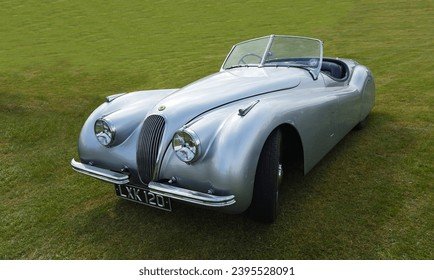
Among the many legendary vehicles created by the British manufacturer, two stand out as defining icons in automotive history: the Jaguar XK120 and the Jaguar E‑Type Series 1. These two sports cars not only shaped Jaguar’s identity but also influenced the design and performance standards of sports cars around the world. From the post-war innovation of the XK120 to the revolutionary beauty of the E-Type, both models represent major milestones in automotive design and engineering.
This article explores their history, engineering innovations, design philosophy, and lasting impact.
The Birth of Jaguar Sports Cars
Jaguar’s journey began in 1922 when William Lyons founded the company that would eventually become Jaguar Cars. Originally producing motorcycle sidecars, the company gradually transitioned into automobile manufacturing.
By the late 1940s, Jaguar was ready to introduce a sports car that would demonstrate its engineering capabilities to the world. That car became the Jaguar XK120, which launched a new era for the company.
More than a decade later, Jaguar would again redefine sports car design with the groundbreaking E-Type.
Jaguar XK120: The World’s Fastest Production Car
A Post-War Breakthrough. The Jaguar XK120 debuted at the 1948 London Motor Show and immediately attracted global attention. At a time when the automotive industry was still recovering from World War II, Jaguar unveiled a sleek sports car capable of extraordinary performance.
The model name “XK120” referred to its top speed of 120 miles per hour, making it the fastest production car available at the time.
This achievement placed Jaguar firmly on the global sports car map.
Design Philosophy
The XK120 featured elegant styling that combined beauty with aerodynamic efficiency. Its design characteristics included:
- A long sculpted hood
- Smooth curved body lines
- A low driving position
- Classic two-seat sports car proportions
Early models were built using a lightweight aluminum body, primarily because steel was scarce in post-war Britain. However, due to high demand, Jaguar later switched to steel body construction for mass production. The car’s graceful curves made it one of the most visually appealing sports cars of the era. 10 Key Milestones in the Evolution of Honda Motor Co., Ltd. | History & Innovations
Engine and Performance
At the heart of the XK120 was Jaguar’s newly developed XK engine, a 3.4-liter inline six-cylinder engine that became legendary in automotive engineering.
- Key performance specifications included:
- Engine: 3.4-liter DOHC inline-six
- Horsepower: approximately 160 hp
- Top speed: 120–126 mph
- Transmission: 4-speed manual
- Layout: Front-engine, rear-wheel drive
In 1949, Jaguar tested the car on a Belgian highway where it achieved speeds exceeding 132 mph, confirming its exceptional performance.
This engine would later power many Jaguar models for decades.
Body Styles and Variants
- The XK120 was offered in three main body styles:
- Open Two-Seater (OTS) – the classic roadster
- Fixed Head Coupé (FHC) – a hard-top version
- Drophead Coupé (DHC) – a luxurious convertible
Between 1948 and 1954, Jaguar produced over 12,000 units, making it a commercial success.
Motorsports Success
The XK120 also achieved success in motorsports. It competed in numerous racing and rally events, demonstrating durability and speed. Its racing success helped Jaguar build credibility in international motorsport competitions.
These achievements eventually paved the way for legendary racing models like the Jaguar D‑Type.
Jaguar E-Type Series 1: A Design Revolution
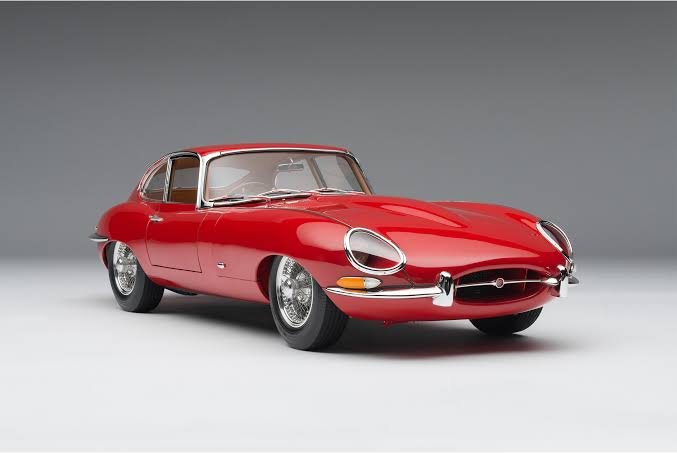
A Sensational Debut. In 1961, Jaguar stunned the automotive world again with the launch of the Jaguar E‑Type Series 1 at the Geneva Motor Show. The car’s design was so striking that it instantly became one of the most famous sports cars ever produced.
Even Enzo Ferrari reportedly called it “the most beautiful car ever made.”
The E-Type combined breathtaking design with outstanding performance at a relatively affordable price compared with rivals like Ferrari and Aston Martin.
Aerodynamic Design
The E-Type was designed by aerodynamics expert Malcolm Sayer, who previously worked on Jaguar’s racing cars.
His background in aircraft design influenced the E-Type’s shape, resulting in:
- A long aerodynamic bonnet
- Streamlined body panels
- Smooth, flowing curves
- Covered headlights on early models
The design achieved an ideal balance between form and function.
Today, the E-Type is often displayed in museums and automotive exhibitions as an example of industrial design excellence.
Advanced Engineering
Compared with earlier sports cars, the E-Type incorporated several advanced technologies.
These included:
- Monocoque construction for improved rigidity
- Independent suspension for better handling
- Four-wheel disc brakes for superior stopping power
- Rack-and-pinion steering
These innovations allowed the E-Type to deliver exceptional handling and ride quality.
Engine and Performance
Early E-Type Series 1 models were powered by the 3.8-liter version of the XK engine, later replaced by a 4.2-liter version in 1964.
Performance figures were impressive for the time:
- Engine: 3.8L or 4.2L inline-six
- Power: about 265 hp
- Top speed: approximately 150 mph
- 0–60 mph: around 6.5 seconds
- Transmission: 4-speed manual
This level of performance rivaled much more expensive exotic sports cars.
Body Styles
The E-Type Series 1 was available in three versions:
- Roadster (Open Two-Seater)
- Fixed Head Coupé
- 2+2 Coupé introduced in 1966 with a longer wheelbase
The 2+2 version offered small rear seats and improved practicality.
Between 1961 and 1968, Jaguar produced more than 38,000 Series 1 vehicles.
Cultural and Historical Impact
Both the XK120 and E-Type played important roles in shaping Jaguar’s global reputation.
Influence on Sports Car Design
These vehicles influenced many later sports cars in terms of:
- Aerodynamic body design
- High-performance engines
- Balance between luxury and speed
Manufacturers across Europe and America studied Jaguar’s approach to sports car engineering.
Presence in Popular Culture
The E-Type in particular became a symbol of the 1960s lifestyle, appearing in:
- Films
- Fashion photography
- Automotive exhibitions
- Museums
It represented a perfect blend of British sophistication and racing performance.
Comparing the XK120 and E-Type Series 1
- Feature XK120 E-Type Series 1
- Launch Year 1948 1961
- Engine 3.4L Inline-Six 3.8L / 4.2L Inline-Six
- Power ~160 hp ~265 hp
- Top Speed ~120 mph ~150 mph
- Body Structure Traditional chassis Monocoque
Reputation Fastest car of its era Most beautiful car ever made
While the XK120 established Jaguar’s reputation, the E-Type elevated it to legendary status.
Collectability and Modern Value
Today, both models are highly valued by collectors.
Classic car auctions frequently sell well-preserved examples for hundreds of thousands of dollars.
Factors affecting value include:
- Original condition
- Matching engine numbers
- Restoration quality
- Historical significance
The E-Type Series 1, particularly early models with covered headlights, is among the most sought-after classic sports cars.
Conclusion
The Jaguar XK120 and Jaguar E‑Type Series 1 represent two defining moments in the history of Jaguar Cars. The XK120 proved that Jaguar could build one of the fastest production cars in the world, while the E-Type redefined sports car design with its breathtaking beauty and advanced engineering.
Together, these vehicles established Jaguar as one of the most respected and admired automotive brands in history. Even decades after their release, they remain symbols of innovation, elegance, and the golden age of sports cars.
Disclaimer:
The content on this blog is for informational and educational purposes only. The views and opinions expressed here are those of the author and do not constitute professional advice. While we strive for accuracy, we make no guarantees regarding the completeness, reliability, or suitability of the information. Readers should use their own judgment and, if necessary, consult a qualified professional before making any decisions based on the content of this blog.