From a Dream of “People’s Car” to a Global Icon — The Story of Volkswagen
In the early 1930s, Germany was a nation struggling with economic hardship. Cars were a luxury only the wealthy could afford, while most families relied on bicycles or trains. Yet one idea began to circulate — what if an ordinary family could own a car? A car that was affordable, reliable, and simple enough for everyday people.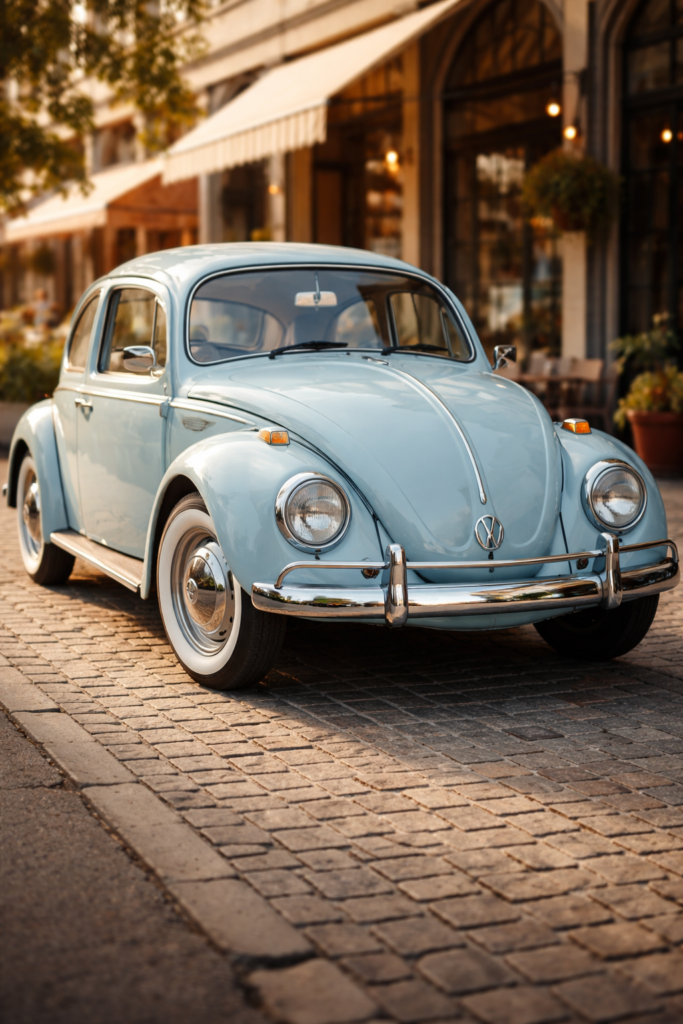
This dream of a “people’s car” would eventually lead to the birth of Volkswagen.
The Idea of a Car for Everyone
In 1934, the German government approached automotive engineer Ferdinand Porsche with a bold challenge: design a car that the average German family could afford.
The requirements were simple but demanding:
- It had to carry two adults and three children
- Reach 100 km/h (62 mph)
- Be fuel-efficient and affordable
- Be reliable on Germany’s new highways
Porsche and his team worked tirelessly, sketching designs and building prototypes. The result was a compact, rounded car that would later become famous worldwide — the Volkswagen Beetle.
Building the City of Cars
To produce the new car at scale, a massive factory was planned in northern Germany. In 1938, construction began on what would become the town of Wolfsburg, specifically created to house the factory and its workers. The car was originally called KdF-Wagen (“Strength Through Joy Car”), and thousands of Germans began saving money through a government program to purchase one.
But history had other plans.
A Dream Interrupted by War
In 1939, World War II began. Instead of producing family cars, the factory switched to manufacturing military vehicles. The dream of the affordable people’s car was put on hold. The factory suffered heavy damage during the war, and it seemed the idea of Volkswagen might disappear before it truly began.
An Unexpected Revival
After the war ended in 1945, the factory fell under British control. A British officer, Ivan Hirst, inspected the damaged facility. Many experts believed the factory should be dismantled. The car design looked outdated, and few companies wanted to invest in it.
But Hirst saw potential.
He ordered the factory repaired and restarted production of the small car designed by Porsche. Slowly, the vehicles began rolling off the assembly line again.
The Beetle Conquers the World
By the 1950s, the little rounded car had earned a new name: Beetle.
The Volkswagen Beetle became known for its:
- Simple engineering
- Unusual rounded shape
- Incredible reliability
It soon gained popularity in Europe, then in the United States, where its quirky design and clever advertising made it a cultural icon. By the late 20th century, Volkswagen had grown into one of the largest automakers in the world. Volkswagen Tayron R-Line – Power Meets Prestige
From a Simple Idea to a Global Brand
What began as a dream to build a car for ordinary people transformed into a global automotive powerhouse.
Today Volkswagen produces a wide range of vehicles and owns several well-known brands, including:
Audi
Porsche
Škoda
Lamborghini
From a small experimental factory in Wolfsburg to a global automotive empire, the story of Volkswagen shows how one idea — a simple car for everyday people — can change the world.
Conclusion
The establishment of Volkswagen is more than a business story. It is a story of innovation, survival through war, and the power of a simple vision: a car that everyone could drive.
And that vision continues to move millions of people across the world every single day.
Disclaimer:
The content on this blog is for informational and educational purposes only. The views and opinions expressed here are those of the author and do not constitute professional advice. While we strive for accuracy, we make no guarantees regarding the completeness, reliability, or suitability of the information. Readers should use their own judgment and, if necessary, consult a qualified professional before making any decisions based on the content of this blog.