India vs Wales 3-1: Harmanpreet Singh Double Stars in World Cup Opener
 Wanderer
  Amstelveen, August 15, 2026: India began their FIH Men’s Hockey World Cup 2026 campaign in impressive fashion, defeating Wales 3-1 in their Pool D opener at the Wagener Stadium in Amstelveen on Saturday. Captain Harmanpreet Singh led from the front with two penalty-corner goals, while Sanjay also found the net as India secured three valuable points.
The victory was especially significant as it came on India’s Independence Day, with the Indian side playing before a large crowd at the nearly 10,000-capacity Wagener Stadium. India controlled much of the contest and established a commanding three-goal advantage before Wales pulled one back late in the fourth quarter.
The Top 10 Performances in Sports History
NBA Schedule 2026-27: Christmas Day Rivalries, Ring Night and the Games to Watch
India make fast start
Wales showed early intent and created the first clear opening, but India gradually settled into the contest and began putting sustained pressure on the Welsh defence.
The breakthrough arrived in the eighth minute. With Harmanpreet temporarily away from the penalty-corner routine, Sanjay stepped up to take the drag-flick and converted to give India a 1-0 lead.
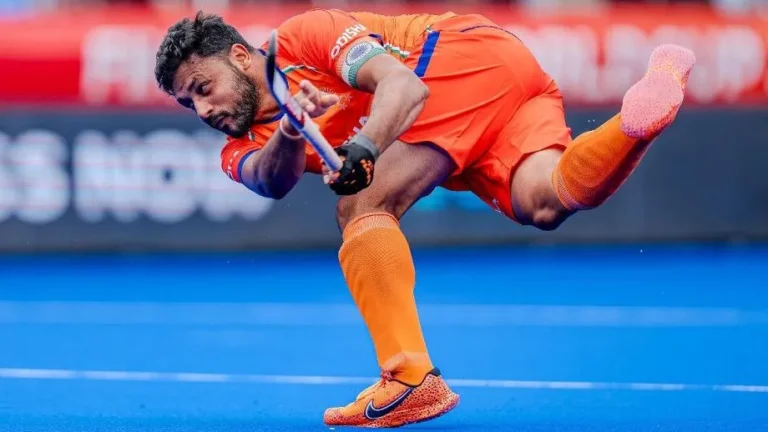
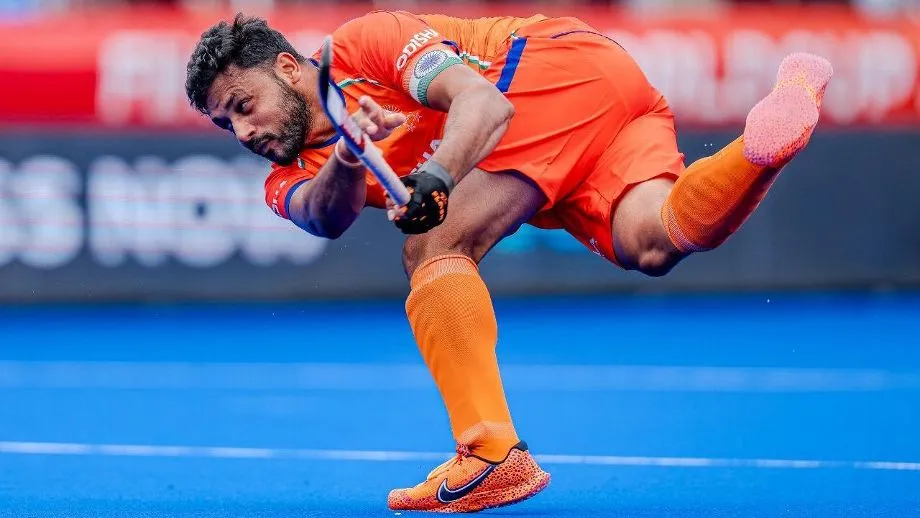
Just three minutes later, India doubled their advantage. A penalty corner presented Harmanpreet with the opportunity to showcase one of the most feared weapons in international hockey, and the captain made no mistake with a powerful drag-flick that beat Wales goalkeeper Toby Reynolds-Cotterill.
India finished the opening quarter 2-0 ahead and looked increasingly comfortable.
Wales struggle to find a way back
The second quarter was more closely contested. India continued to create penalty-corner opportunities but could not add to their lead before half-time.
Wales, meanwhile, attempted to regain possession and build attacks of their own, but India’s defensive structure kept them from creating enough clear chances. The two-goal cushion remained intact as the teams went into the interval.
India’s inability to extend their lead in the second quarter meant Wales remained within touching distance. But the Indian side continued to look composed, with their set-piece execution providing a decisive edge.
Harmanpreet strikes again
The third quarter produced the moment that effectively put the result beyond doubt.
In the 43rd minute, India won another penalty corner and Harmanpreet once again took responsibility. The captain unleashed another precise drag-flick to make it 3-0 and complete his brace.
For Harmanpreet, the two goals underlined his importance to India’s campaign. His penalty-corner expertise not only provided the goals but also gave India a constant threat whenever they entered the attacking circle.
With India three goals ahead, Wales needed a dramatic turnaround in the final quarter.
Wales pull one back, but India hold firm
Wales finally found a breakthrough in the 56th minute. Sam Welsh scored after a scramble inside the Indian circle, although the goal was initially surrounded by uncertainty and required a lengthy review before it was eventually awarded.
The goal gave Wales renewed hope, but India responded with composure. Earlier, India’s goalkeeper had produced an important diving save to deny Wales from their first penalty corner of the match, preserving the three-goal advantage at the time.
Wales pushed forward during the closing minutes, but India refused to surrender their grip on the match. The final whistle confirmed a 3-1 victory.
A statement start for India
The result gives India an ideal opening to their Pool D campaign. Sanjay’s early goal and Harmanpreet’s brace demonstrated the effectiveness of India’s penalty-corner routines, while the defence largely kept Wales at arm’s length.
The victory also provides an important confidence boost for a team carrying considerable expectations at this tournament. India are seeking to end a long wait for World Cup glory, having last won the men’s Hockey World Cup in 1975.
For captain Harmanpreet, the performance was a fitting response to the responsibility surrounding the campaign. He had spoken before the tournament about viewing the pressure surrounding India’s World Cup drought as a responsibility rather than simply a burden.
India now turn their attention to their next Pool D assignment against England on August 17, before facing Pakistan on August 19. With only three pool matches, every point and every goal could prove important in determining the route to the knockout stages.
For now, however, India can celebrate a thoroughly encouraging opening-night performance: three goals, three points and a captain who once again proved decisive when it mattered most.