BWF World Championships 2026: India’s Medal Hopes, PV Sindhu, Lakshya Sen & Satwik-Chirag
 Wanderer
  BWF World Championships 2026: India’s Top Medal Contenders Take Centre Stage in New Delhi
New Delhi, August 15, 2026: Indian badminton is preparing for one of its biggest weeks of the year as the BWF World Championships 2026 arrive in New Delhi from August 17 to 23. The tournament returns to India after a 17-year gap, giving the country’s leading shuttlers a rare opportunity to compete for world titles in front of a home crowd.
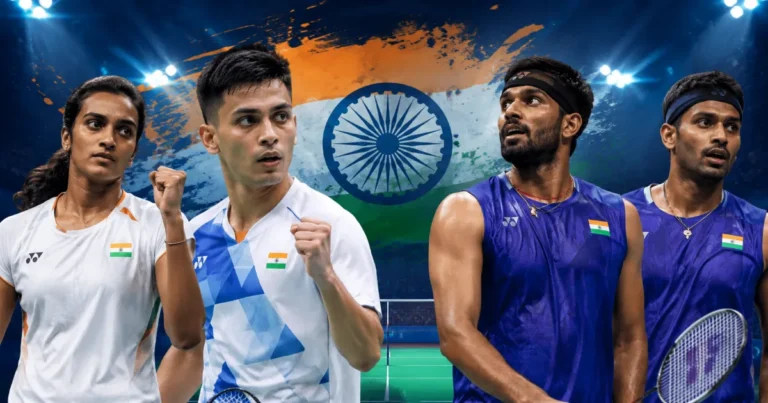
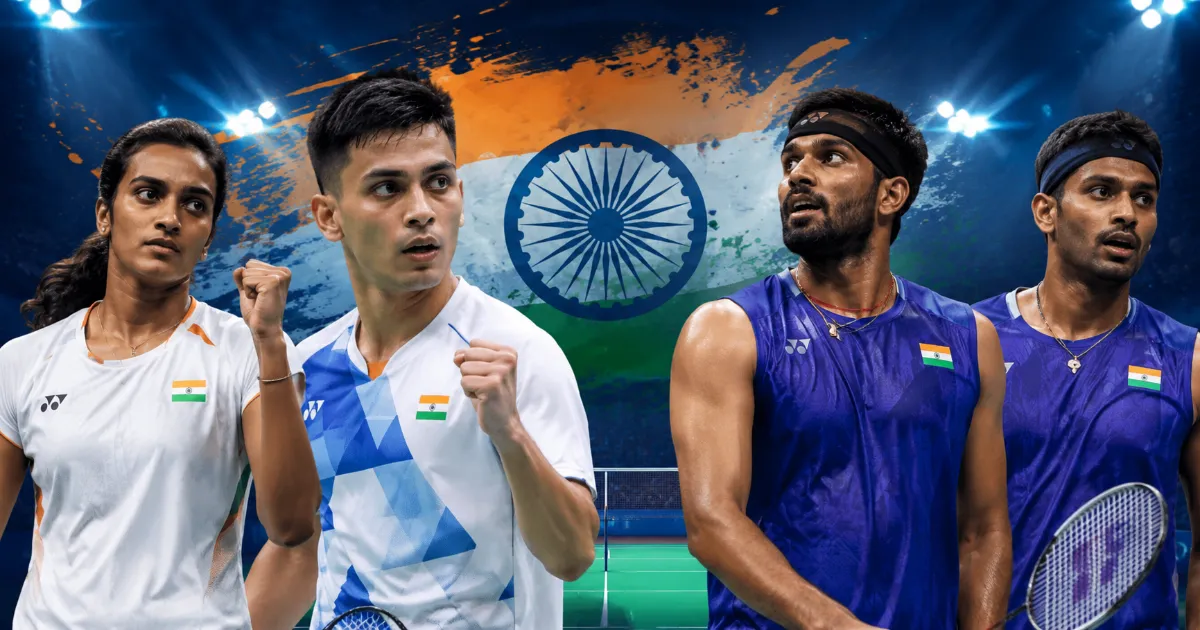
India will be represented across all five disciplines — men’s singles, women’s singles, men’s doubles, women’s doubles and mixed doubles. Leading the challenge are former world champion PV Sindhu, men’s singles star Lakshya Sen, and the highly rated men’s doubles combination of Satwiksairaj Rankireddy and Chirag Shetty.
For a country that has produced Olympic medallists, world champions and some of the most recognisable names in badminton, the 2026 edition carries an added sense of expectation. The question is no longer simply whether India can win a medal. With several players arriving in encouraging form, the bigger question is whether the hosts can challenge for the gold.
India vs Wales 3-1: Harmanpreet Singh Double Stars in World Cup Opener
Heart of the Beast Trailer 2 Review | The Scene Story
Delhi gets ready for badminton’s biggest stage
The 30th edition of the BWF World Championships will be staged at the Indira Gandhi Arena in New Delhi, with the competition running from August 17 through August 23. The opening rounds are scheduled for August 17 and 18, followed by the later knockout stages before the finals on August 23.
The return of the World Championships to India is significant. The country last hosted the tournament in 2009, making this the first World Championships on Indian soil in 17 years.
That home setting could be important. Players will be familiar with the surroundings, while the expected support from Indian fans could provide an emotional lift during tight matches.
At the same time, home advantage brings its own pressure. Every Indian appearance is likely to attract enormous attention, particularly when established stars such as Sindhu, Lakshya and Satwik-Chirag take the court.
PV Sindhu: the proven big-stage performer
If one Indian player knows what it takes to win at the World Championships, it is PV Sindhu.
The two-time Olympic medallist became the first Indian to win the women’s singles world title when she triumphed in 2019. She also won silver at the 2017 and 2018 editions, giving her a remarkable record at the event.
Sindhu enters the 2026 championship as the ninth seed.
More importantly, she has shown signs of rediscovering her best form. In July, she won the Japan Open Super 750 title, defeating Japan’s Akane Yamaguchi in straight games in the final. It was an important confidence boost ahead of the World Championships.
Her draw, however, will not offer an easy route to the latter stages. Sindhu could face world-class opposition early, with China’s Wang Zhi Yi among the players who could potentially stand between her and another deep run. Wang, currently ranked third in the world, has acknowledged the psychological challenge of facing the Indian star.
For Sindhu, the equation is straightforward: experience, recent form and a supportive home crowd give her a genuine opportunity, but she will have to survive a field packed with elite players.
Lakshya Sen carries India’s men’s singles hopes
In men’s singles, Lakshya Sen is India’s leading seed at No. 14.
Sen has already demonstrated that he belongs on the biggest stages. His Olympic experience and previous deep runs at major tournaments have made him one of India’s most reliable singles players.
He will nevertheless face a demanding challenge in Delhi. The men’s singles draw includes defending world champion and top seed Shi Yu Qi, as well as a host of established contenders. India’s other singles representative, Ayush Shetty, has also been handed a difficult path after being drawn against the top seed in the early stages.
Sen’s preparation has included appearances against the world’s leading players, and his ability to handle long rallies and pressure situations will be crucial.
For India, a medal in men’s singles would be particularly valuable. The country has developed considerable depth in the discipline, but converting that talent into a World Championships medal remains one of the major challenges.
Satwik-Chirag: India’s biggest gold medal hope?
If there is one Indian pair that could realistically challenge for the men’s doubles title, it is Satwiksairaj Rankireddy and Chirag Shetty.
The pair are seeded fifth in New Delhi and arrive as one of the world’s leading men’s doubles combinations. They have already shown in 2026 that they can beat elite opposition, winning the Singapore Open to claim their first BWF World Tour title in two years.
But there is a concern heading into the championships: Satwik’s recurring shoulder problem.
The Indian star has spoken openly about the frustration caused by the injury. Despite the setback, the pair remain committed to their aggressive style and have adapted aspects of Satwik’s game to reduce the strain on his shoulder.
Their style is built around speed, power and attack. Satwik’s explosive hitting combines with Chirag’s movement and net play to create one of the most dangerous attacking partnerships in world badminton.
The pair have never won the World Championships, and a title on home soil would arguably be the biggest achievement of their partnership.
The challenge will be managing the physical demands of a seven-day championship. If Satwik is healthy and the pair find their rhythm early, India could have a serious gold-medal contender in the men’s doubles draw.
India has strength beyond its biggest stars
India’s challenge is not limited to three marquee names.
In men’s doubles, Hariharan Amsakarunan and MR Arjun will provide another Indian combination capable of causing problems.
Women’s doubles will feature Treesa Jolly and Gayatri Gopichand Pullela, alongside Kavipriya Selvam and Simran Singhi. In mixed doubles, Dhruv Kapila and Tanisha Crasto are among India’s principal hopes, with Rohan Kapoor and Ruthvika Shivani Gadde also in the squad.
The breadth of India’s representation is significant. It reflects the growing depth of the country’s badminton system beyond the players who have traditionally dominated headlines.
Young players such as Unnati Hooda also have an opportunity to announce themselves on the biggest stage. Hooda will compete alongside Sindhu in women’s singles.
The Indian contingent
India’s 10-member contingent is spread across all five disciplines:
Men’s singles
- Lakshya Sen
- Ayush Shetty
Women’s singles
- PV Sindhu
- Unnati Hooda
Men’s doubles
- Satwiksairaj Rankireddy / Chirag Shetty
- Hariharan Amsakarunan / MR Arjun
Women’s doubles
- Treesa Jolly / Gayatri Gopichand Pullela
- Kavipriya Selvam / Simran Singhi
Mixed doubles
- Dhruv Kapila / Tanisha Crasto
- Rohan Kapoor / Ruthvika Shivani Gadde
India’s entries mean the hosts will have a presence in every discipline for the championship.
Why the draw matters
At the World Championships, reputation alone is not enough. A difficult draw can dramatically change a player’s medal prospects.
The 2026 draw has already generated plenty of discussion. Sindhu is seeded ninth, Lakshya 14th, Satwik-Chirag fifth, while Dhruv Kapila and Tanisha Crasto are seeded 15th in mixed doubles.
Several Indian players face potential clashes with some of the biggest names in badminton before the later rounds.
That makes the opening two days particularly important. Players need to avoid unnecessary physical expenditure, settle quickly into the conditions and build momentum before the quarter-finals.
Conditions could become a factor
There is another element that could influence the tournament: the conditions inside the arena.
Lighting, air-conditioning and shuttle speed can all affect badminton at the highest level. Players who adapt quickest can gain an advantage, particularly when matches become long and tactical.
For Indian players, familiarity with the home environment could help. But they will still have to deal with the same conditions as their opponents, and the ability to adjust during a match could prove decisive.
The organisers have also taken steps to ensure the venue is ready for the championship following concerns that arose during the India Open. The BWF has expressed satisfaction with the venue’s readiness, while organisers have introduced measures to address issues including pigeons and monkeys around the complex.
India’s medal prospects
The most realistic way to assess India’s chances is discipline by discipline.
Men’s doubles: Satwik-Chirag represent India’s strongest gold-medal opportunity, provided Satwik’s shoulder holds up.
Women’s singles: Sindhu’s recent Japan Open triumph makes her one of India’s most intriguing contenders. Her experience at the World Championships could be invaluable.
Men’s singles: Lakshya Sen has the ability to beat top opponents, but the depth of the men’s field makes a medal run extremely demanding.
Women’s doubles: Treesa-Gayatri and Kavipriya-Simran face a tough international field, but a strong start could put them in position to make a breakthrough.
Mixed doubles: Dhruv Kapila and Tanisha Crasto are experienced enough to trouble higher-ranked opponents and could become India’s surprise performers.
A tournament with bigger meaning for Indian badminton
Beyond medals, the 2026 World Championships represent an important moment for Indian badminton.
The country has spent more than a decade building an identity as a major badminton nation. Sindhu’s world title and Olympic medals, Saina Nehwal’s historic achievements, Kidambi Srikanth’s rise, and the emergence of Lakshya and Satwik-Chirag have transformed expectations around the sport.
India is no longer simply hoping to produce one surprise medal.
The expectation is that its leading players should regularly challenge for titles.
Hosting the World Championships brings that expectation into sharper focus.
The tournament begins on August 17, and by August 23 India could have added another chapter to its rapidly growing badminton story.
For Sindhu, it is an opportunity to revisit the stage where she has enjoyed some of the greatest moments of her career. For Lakshya, it is a chance to establish himself among the world’s elite. For Satwik and Chirag, it could be the moment they finally convert their status as one of the sport’s most dangerous pairs into a World Championships crown.
And for Indian badminton, there may be no better setting than home.